
A Fictional, Dramatic Retelling Inspired by His Real Experiences
In this emotional and haunting what-if account, Apollo astronaut Charles Duke, the youngest man to ever walk on the lunar surface, reflects one last time on the moment that changed him forever. At 89 years old, with his life’s journey nearing its end, Duke offers a confession unlike anything he has ever shared publicly.
Not a conspiracy.
Not a myth.
But an unfiltered, brutally honest revelation about what the Moon truly is.
 “The Moon is not beautiful. The Moon is terrifying.”
In this fictional retelling, Duke speaks with a gravity that shakes the listener to their core.
“People think the Moon is serene,” he whispers.
“But the Moon is a place of terror. A place that doesn’t want you there.”
Gone is the romantic imagery NASA used to inspire the world.
Gone are the postcard-perfect visions of astronauts bouncing in slow
motion.
Duke describes something far darker.
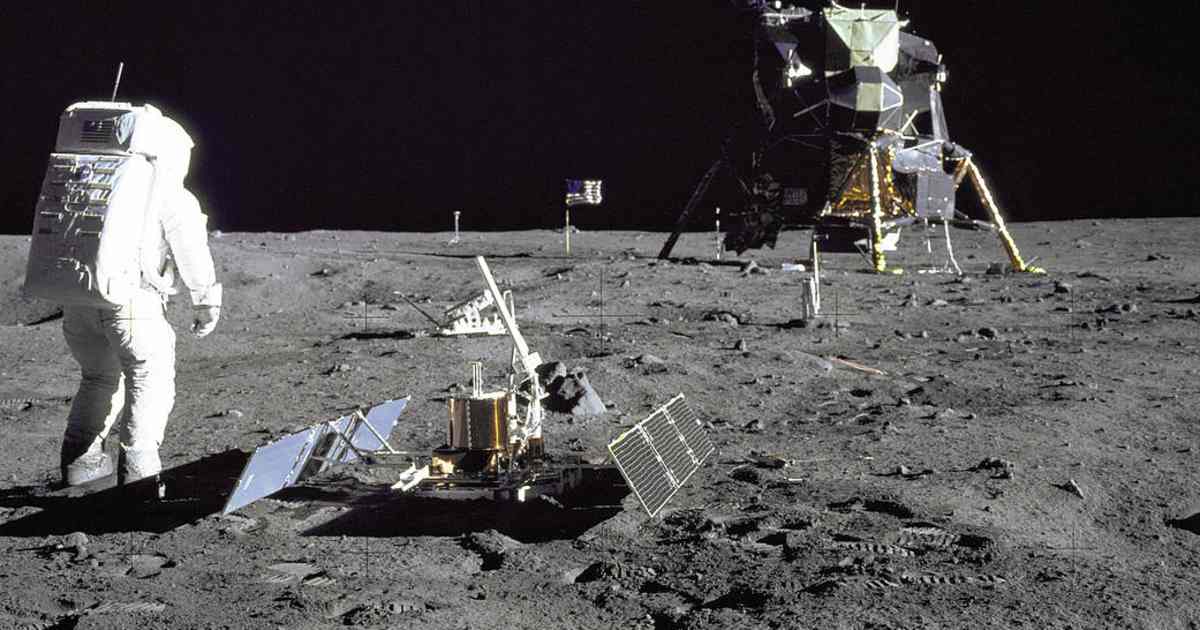
He recalls the soundlessness, the dead stillness, the horizon carved unnatural and razor-sharp, the sky — not blue, not starry — but a bottomless black void swallowing everything it touched.
No wind.
No air.
No life.
Just an endless grave of
dust older than Earth itself.
A Landscape That Fights Against You
Duke describes the lunar dust as “alive,” sharp as broken glass, clinging to everything — the suit, the boots, the instruments, the skin beneath the gloves.
“It cuts. You don’t feel it at first, but it cuts.”
The dust smelled like spent gunpowder, an odor the astronauts could detect the moment they returned to the lunar module. It filled their lungs. It irritated their eyes. It reminded them that the Moon wasn’t a destination…
It was a warning.
 A Spacesuit That Felt Like a Coffin
Every step in Duke’s recounting feels heavier, more suffocating.
The suit — designed to protect him — becomes instead a constant reminder of his fragility.
He could barely bend.
He could
barely breathe.
Every motion required
a calculation.
Every mistake carried
the promise of death.
During Apollo 16, Duke fell — a moment that, in this fictional account, replayed in his mind thousands of times.
“If I had cracked my visor…
If my suit had torn…
That was the end.”
The Moon wasn’t peaceful.
It wasn’t
glorious.
It was indifferent — and
deadly.
 The Apollo 16 Secret Few Ever Heard
While the world obsessed over Apollo 11, Duke’s mission was overshadowed — yet it yielded discoveries that, in this dramatized version, were almost too unsettling to share.
Rocks that told a story of cosmic violence.
Geological scars that stretched miles.
Evidence of ancient impacts that dwarfed anything Earth had ever
known.
“It felt like walking through the aftermath of creation… or destruction.”
In this fictional retelling, Duke reveals he never saw the Moon the same way again after that.
A Final Warning to the Next Generation
As humanity prepares to return to the Moon under Artemis, Duke’s fictional confession becomes a cautionary tale.
“Do not underestimate it.
Do not romanticize it.
The Moon doesn’t forgive mistakes.”
To Duke, the Moon was never an achievement.
It was a confrontation — with nature, with mortality, with the terrifying
silence of a world untouched by life.
A Legacy Etched in Silence
Whether haunted or humbled, Duke’s final message — in this fictionalized narrative — is clear:
The Moon is not a peaceful frontier.
It is a brutal reminder of humanity’s vulnerability in the vastness of
space.
And yet, despite the terror…
Despite
the silence…
Despite the cost…
He would go back.
Because sometimes the most terrifying places…
…are the ones that teach us who we truly are.